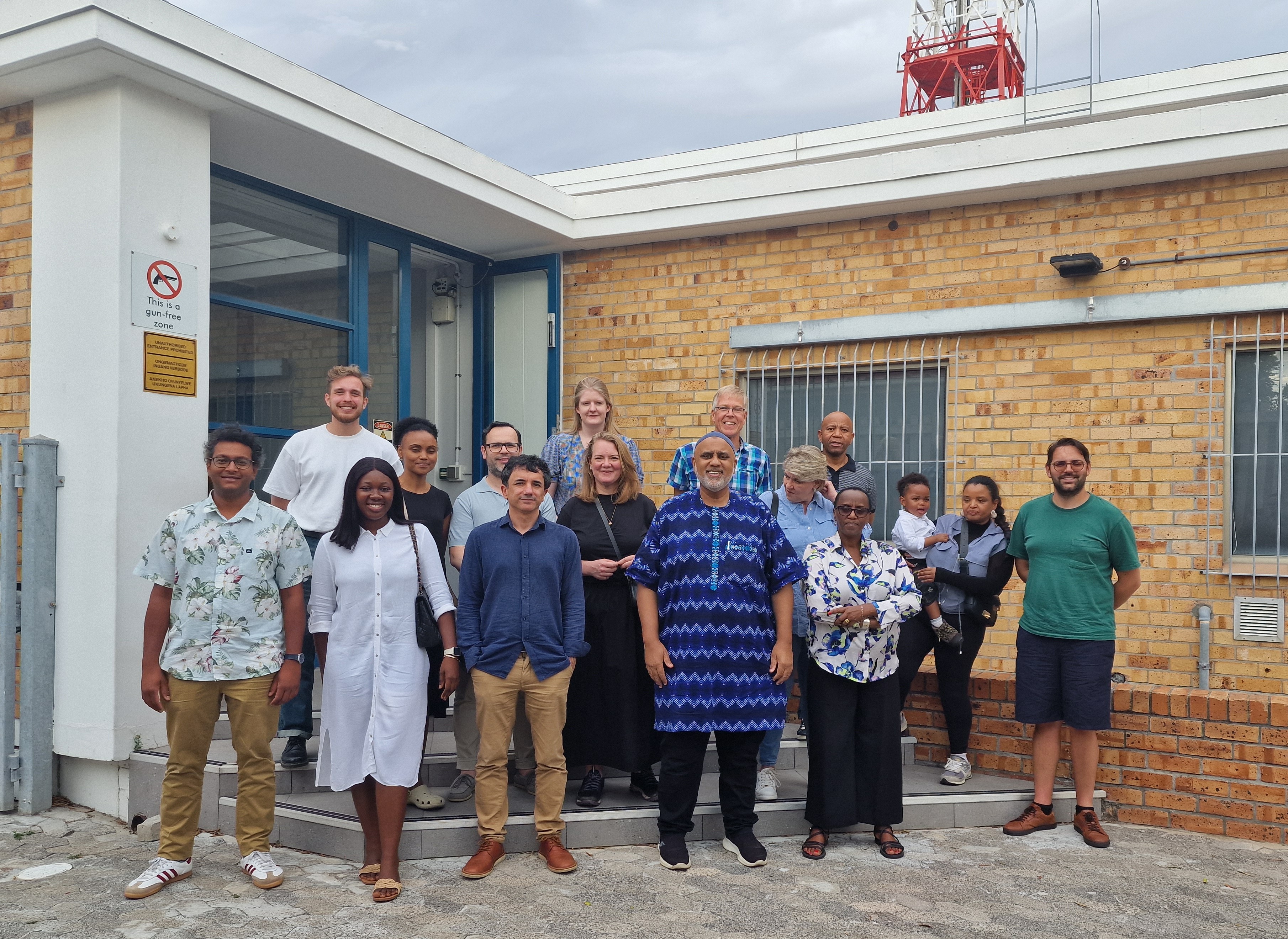
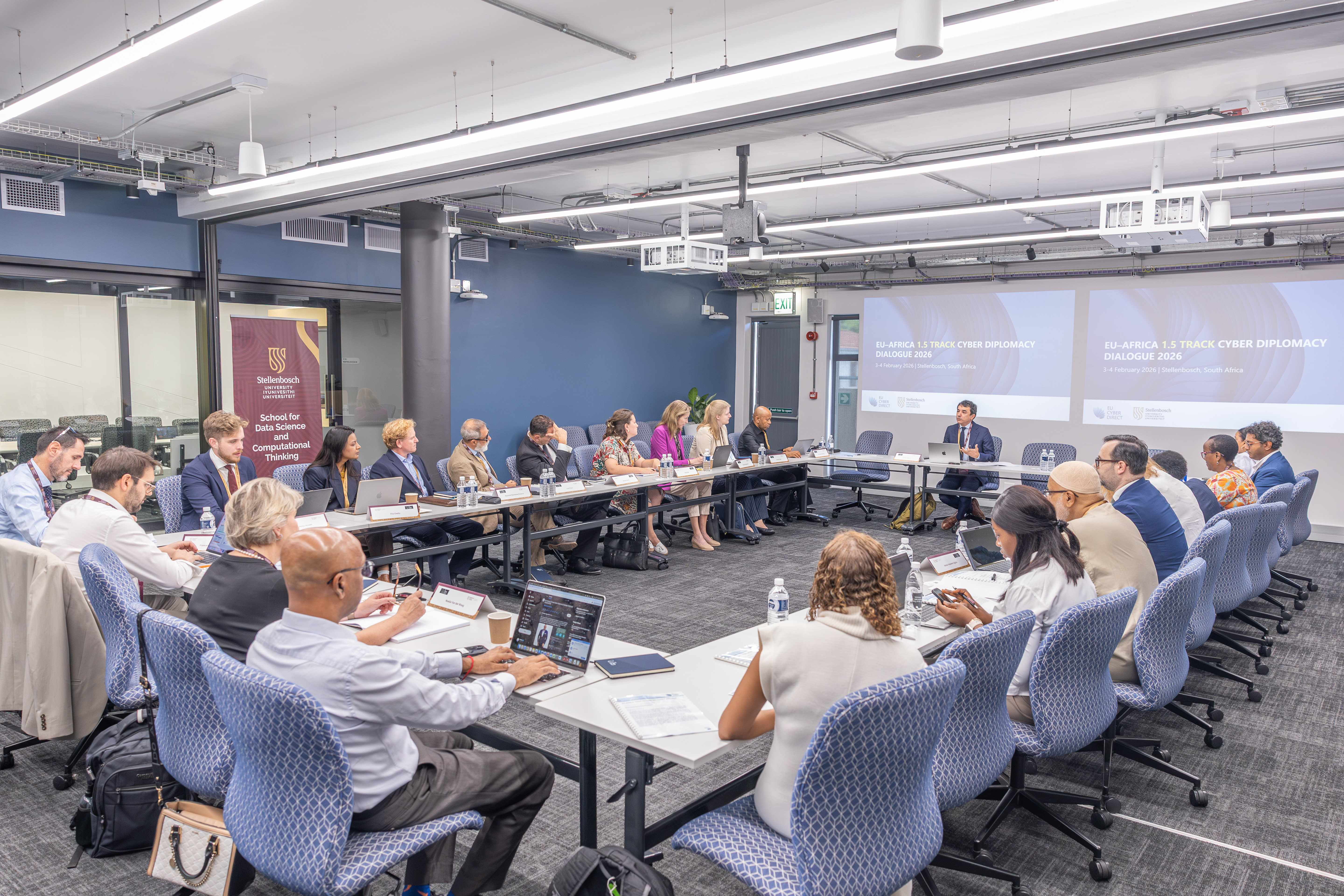
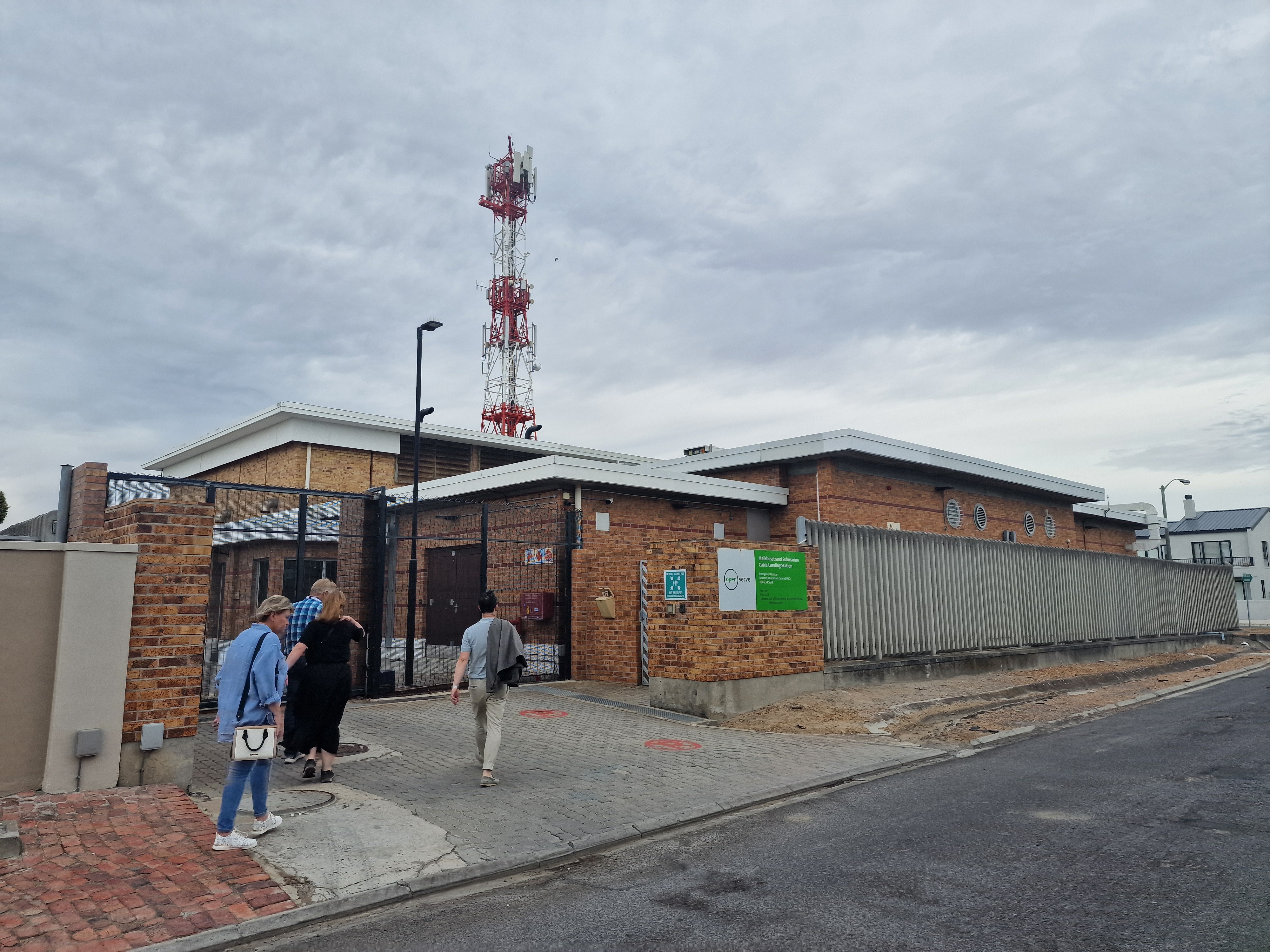
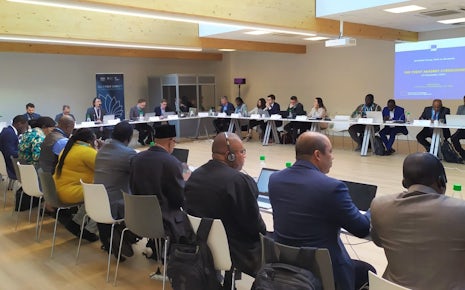
As the European Union (EU) and Africa deepen cooperation on digital transformation, on 3–4 February 2026, the EU Cyber Direct – EU Cyber Diplomacy Initiative, together with Stellenbosch University, was delighted to convene the EU–Africa Track 1.5 Cyber Diplomacy Dialogue in Stellenbosch, South Africa.
In a rapidly evolving international cyber landscape, this milestone dialogue provided a critical opportunity to enhance mutual understanding, advance practical policy responses, and build trust as Europe and Africa implement their cybersecurity strategies.
Building on established and more recent EU–Africa engagements, this dialogue supported both regions in moving towards more strategic dialogue and cooperation spanning cybersecurity, cyber governance, and secure connectivity. On the one hand, Africa and the EU have established consolidated exchanges around UN processes, including the 2021–2025 UN Open-ended Working Group (OEWG) and the ongoing transition towards the UN Permanent Mechanism. On the other, the EU's Global Gateway and international cyber strategy provide instruments for investment and policy coordination to support resilient digital ecosystems across Africa and strengthen cooperation between continents.
To consolidate these efforts and translate them into sustained strategic dialogue, this Track 1.5 EU–Africa Cyber Diplomacy Dialogue convened government representatives, regional experts, international organisations, academia, civil society, and industry to explore shared priorities, identify concrete areas for cooperation, and strengthen the foundation for enhanced collaboration. With this ambition, this dialogue focused on:
- Establishing long-term sustained dialogue: Creating a recurring, cross-sectoral forum for EU–Africa cyber and digital security discussions.
- Enhancing interregional trust and transparency: Building confidence among EU and African States and key stakeholders on shared challenges and opportunities.
- Identifying areas for future collaboration: Mapping convergences to inform joint initiatives on resilience, capacity building, and international cyber governance.
The success of this dialogue built on the contribution of an outstanding variety of regional and policy perspectives combined with technical and practitioner expertise, fostering trusted exchange to find common ground on responsible State behaviour, enhance cybersecurity cooperation, and identify novel approaches to cyber capacity building. Through informal yet structured discussion, this critical exchange supported participants in identifying tangible pathways for further collaboration and enhancing informed policy approaches as both regions navigate shared digital security challenges.